Object Record
Images
Metadata
Object Name |
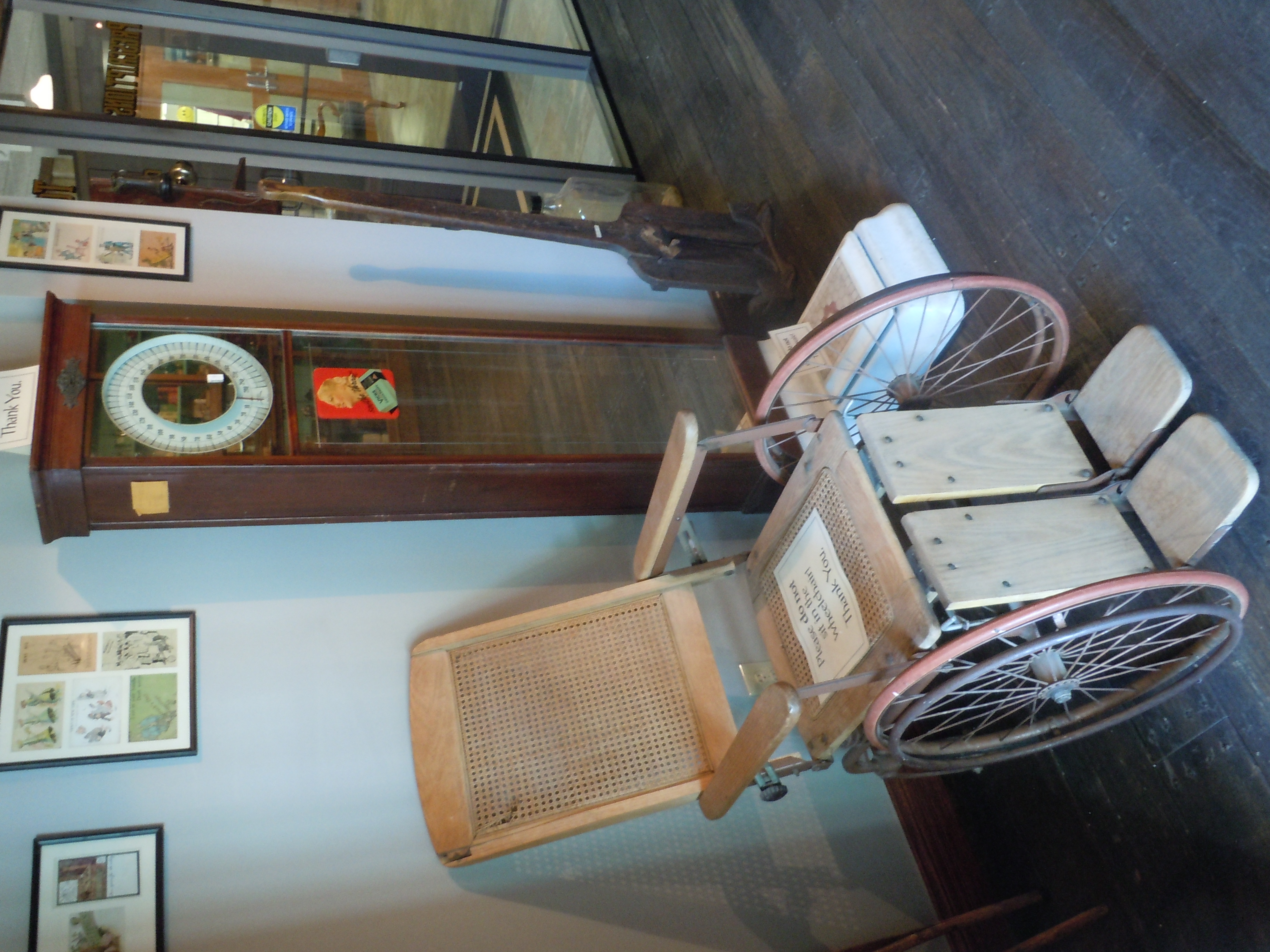
Wheelchair |
Source |
Thoreson Museum of Pharmacy |
Iowa History Era Tag |
Prosperity to the Depression (1897-1939) |
Chronological Tag |
The Emergence of Modern America (1890-1930) |
Catalog Number |
2018.060.007 |
Credit line |
Thoresen Museum of Pharmacy - Algona, IA |
Description |
Wheelchair, wooden construction, caned seat. Adjustable back. Content can be used with the following standards: 4th grade SS 4.25 Technological Changes in a lesson on medical practices and advancements of the early 1900s. For any use other than instructional resources, please check with the organization that owns this item regarding copyright restrictions. |
Additional Research & Sources |
The first drug store to appear in the United States was in 1729 in Philadephia, founded by Christopher Marshall. The store sold medicine, treatments and small medical supplies, and soon began to offer perscriptions for those in need. The stores began to increase in number and by 1852, the American Pharmaceutical Association (American Pharmacists Assocation) was founded. While early drug stores offered medical treatments, most were antidotes to counteract an already contracted illness, rather than medicine to prevent it. The modern drug store and pharmacy appeared shortly after the Civil War, when scientific method became widely accepted and new drugs were emerging. |
Primary/Secondary Source |
General primary source |
County Tag |
Kossuth |
Relation |
Show Related Records... |
Multimedia Links |
Click here to view/hear the file. |
Search Terms |
Early Business and Industry Health & Wellness Towns Drugstores Pharmaceutical industry Pharmacists Medical equipment & supplies Wheelchairs |
Legal Status |
Ownership of this resource is held by the Thoreson Museum at Pharmacists Mutual and has been provided here for educational purposes only, specifically for use in the Iowa Museum Association's "Teaching Iowa History" project. It may not be downloaded, reproduced or distributed in any format without written permission from the Rights Holder. For information on U.S. and International copyright laws, consult an attorney. |