Object Record
Images
Metadata
Object Name |
Bank |
Source |
Mount Ayr Depot Museum |
Iowa History Era Tag |
Prosperity to the Depression (1897-1939) |
Chronological Tag |
The Emergence of Modern America (1890-1930) |
Catalog Number |
2018.021.004 |
Credit line |
Mount Ayr Depot Museum - Mount Ayr, Iowa |
Description |
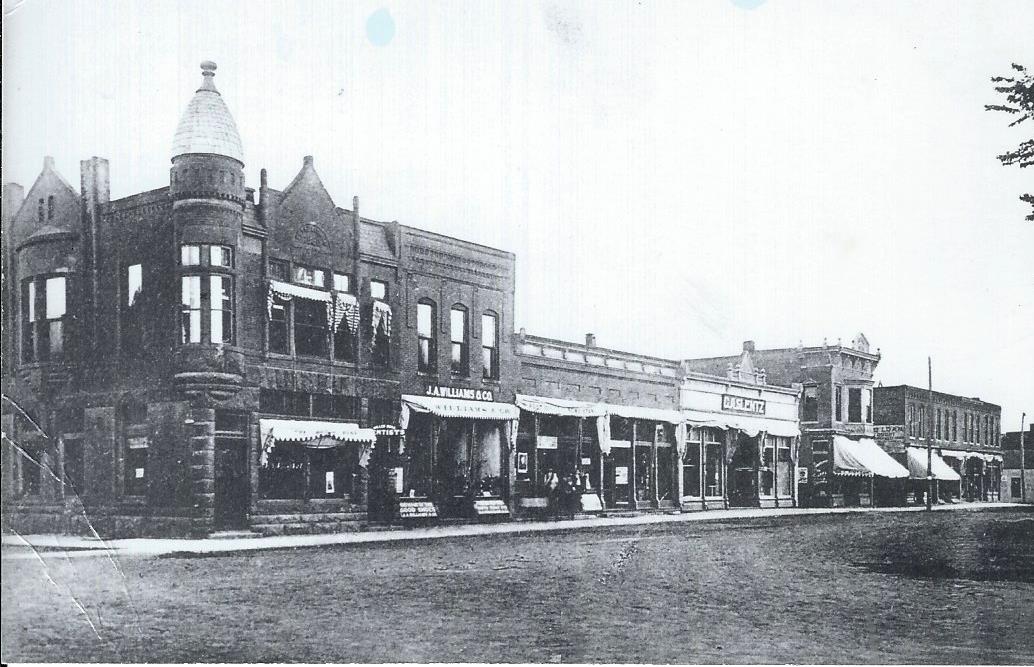
This photograph, taken around 1910, shows the east side of the Mount Ayr, Iowa, town square. The large building on the street corner was built in 1892 by brothers Day and Charles Dunning. The Dunning brothers were the sons of Barton and Laura Dunning, Mount Ayr's founders. The Dunning brothers opened Citizens Bank in this building, which operated until 1904, when it became Iowa State Bank. The building next to the bank was a shoe and clothing store operated by J. A. Williams. The Mount Ayr Post Office stood next to this store for many years. Content can be used with the following standards: SS-Econ. 9-12.24 Iowa Impact Upon Economy in a lesson on small town Iowa businesses in the early 1900s. For any use other than instructional resources, please check with the organization that owns this item regarding copyright restrictions. |
Additional Research & Sources |
Barton Dunning, the father of Day and Charles Dunning, was one of the early settlers of Mount Ayr where he became the first merchant of the town when he brought in goods from Keokuk, Iowa to sell. He began his own mercantile business along with working in real estate. At the age of eighteen, his son Day began to follow in his father's footsteps by creating a mercantile business with Andrew Ingram. His brother Charles, began the Citizens' Bank of Mount Ayr, which Day took over when his brother passed. |
Primary/Secondary Source |
Significant - Local |
County Tag |
Ringgold |
People |
Dunning, Barton |
Relation |
Show Related Records... |
Multimedia Links |
Click here to view/hear the file. |
Search Terms |
Business & Industry Towns Banking industry Banks |
Legal Status |
Ownership of this resource is held by the Mount Ayr Depot Museum and has been provided here for educational purposes only, specifically for use in the Iowa Museum Association's "Teaching Iowa History" project. It may not be downloaded, reproduced or distributed in any format without written permission from the Rights Holder. For information on U.S. and International copyright laws, consult an attorney. |