Object Record
Images
Metadata
Object Name |
Store, Hardware |
Source |
Mount Ayr Depot Museum |
Iowa History Era Tag |
World War II to an Urban State (1940-1963) |
Chronological Tag |
Postwar United States (1945-1970s) |
Catalog Number |
2018.021.087 |
Credit line |
Mount Ayr Depot Museum - Mount Ayr, Iowa |
Description |
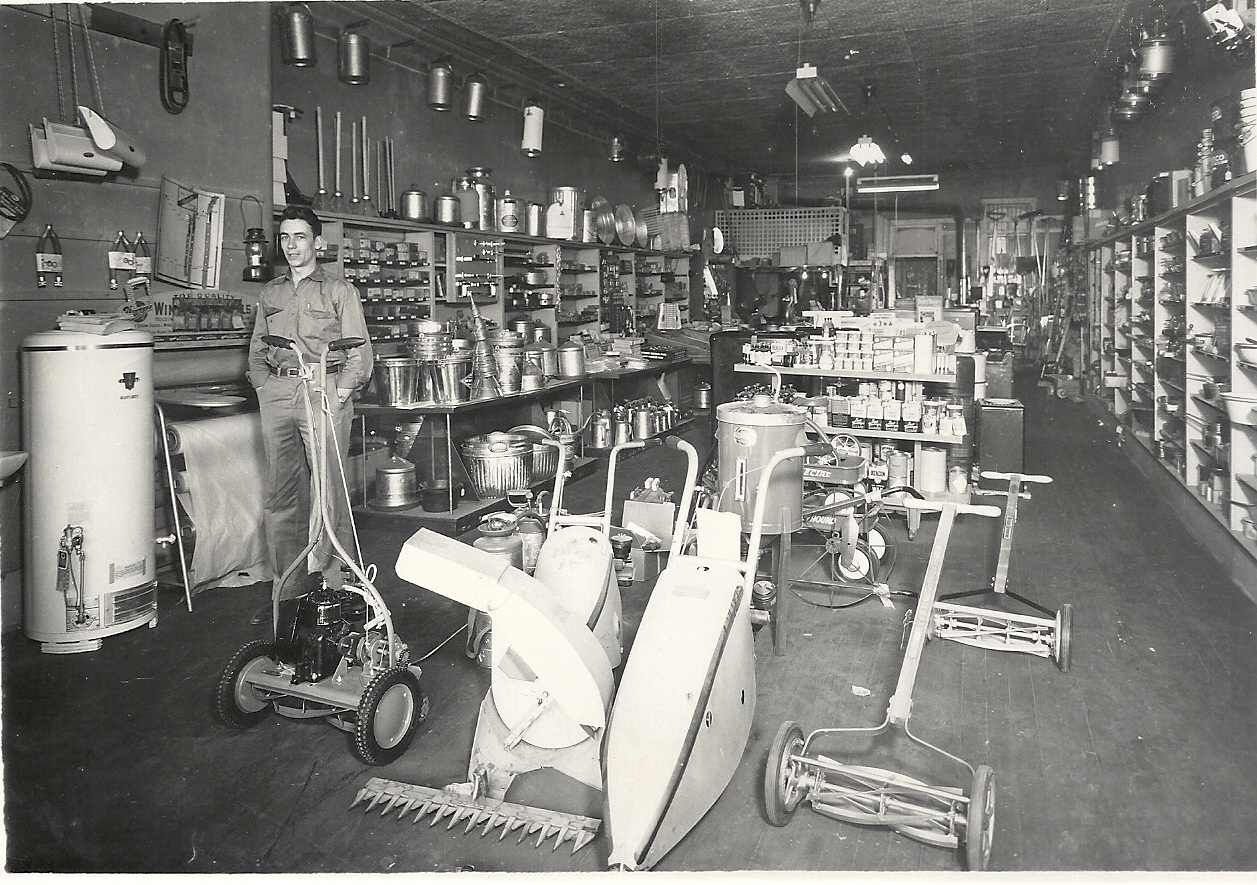
This photograph shows Charles William "Bill" Horne in his hardware store at 106 E. Madison in Mount Ayr, Iowa. Horne's Hardware was started in 1928 when Horne's grandfather, Charlie Horne, bought Keating's Hardware on the east side of the Mount Ayr town square. Charlie Horne died in 1960 leaving Bill, his only child, as sole owner. Bill and his wife Barb operated the store until they both passed away. Content can be used with the following standards: SS-Econ. 9-12.24 Iowa Impact Upon Economy in a lesson on Iowan town businesses during the mid-1900s. For any use other than instructional resources, please check with the organization that owns this item regarding copyright restrictions. |
Additional Research & Sources |
After graduating highschool in 1908, Charlie Horne worked for a few years in the lumber business at the Mount Ayr Lumber Co, in Redding before moving to Mount Ayr in 1917. In 1918, Horne, along with Harry and Arthur Liggett, bought H.H. Wilson's grocery store (the store remained open until 1947 when it was bought by Hy-Vee). A few years after the purchase of the grocery store, in 1928, Horne bought C.R. Keating's hardware store. In 1927, his son (Charles "Bill" William) was born, who eventually took over ownership of the store. The store was in operation until 1996. |
Primary/Secondary Source |
Significant - Local |
County Tag |
Ringgold |
People |
Horne, Charles William "Bill" |
Relation |
Show Related Records... |
Multimedia Links |
Click here to view/hear the file. |
Search Terms |
Business & Industry Towns Hardware stores |
Legal Status |
Ownership of this resource is held by the Mount Ayr Depot Museum and has been provided here for educational purposes only, specifically for use in the Iowa Museum Association's "Teaching Iowa History" project. It may not be downloaded, reproduced or distributed in any format without written permission from the Rights Holder. For information on U.S. and International copyright laws, consult an attorney. |