Object Record
Images

Metadata
Object Name |
Guidepost |
Source |
Cedar Falls Historical Society |
Iowa History Era Tag |
Prosperity to the Depression (1897-1939) |
Chronological Tag |
The Emergence of Modern America (1890-1930) |
Catalog Number |
2018.018.100 |
Credit line |
Cedar Falls Historical Society - Cedar Falls, Iowa |
Description |
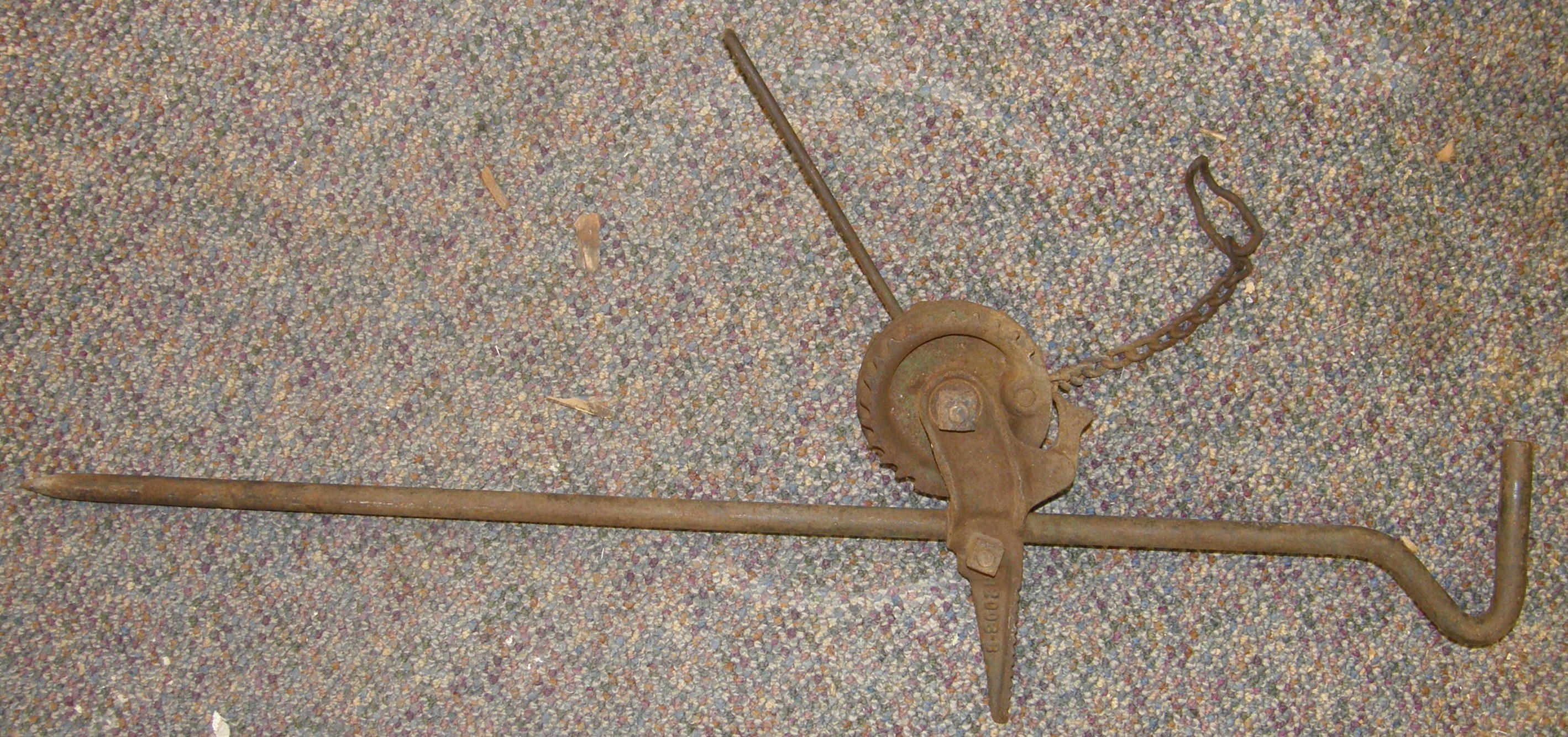
This is a check-wire anchor stake, also known as a corn stake or row marker. This stake anchored the knotted wire that ran through the trip forks on a two-row corn planter. As each knot ran through the trip forks two hills of corn were planted in parallel rows. At the end of each row, the farmer moved the anchor stake to the center of the planter, adjusted the tension on the wire to that of the previous row, and continued to plant. In this way the field was planted in an even grid that allowed for cultivation of weeds either lengthwise or crosswise of the field. Today, corn is drilled closer together which does not allow for cross-cultivation, and herbicides are used to keep the weeds out. For any use other than instructional resources, please check with the organization that owns this item regarding copyright restrictions. |
Additional Research & Sources |
This object may be used for lessons in: SS.K.17. Compare life in the past to life today. SS.1.21. Compare life in the past to life today within different communities and cultural groups, including indigenous communities. SS.4.25. Analyze the impact of technological changes in Iowa, across time and place. SS.4.26. Explain how Iowa's agriculture has changed over time. |
Primary/Secondary Source |
General primary source |
County Tag |
Black Hawk |
Subjects |
Agricultural equipment Agriculture Farm life Farming Farms Corn |
Multimedia Links |
Click here to view/hear the file. |
Search Terms |
Agriculture Agricultural equipment Corn Farm life Farming Farms |
Legal Status |
Copyright to this resource is held by the Cedar Falls Historical Society and has been provided here for educational purposes only, specifically for use in the Iowa Museum Association's "Teaching Iowa History" project. It may not be downloaded, reproduced or distributed in any format without written permission from the Rights Holder. For more information on U.S. and International copyright laws, consult an attorney. |