Object Record
Images
Metadata
Object Name |
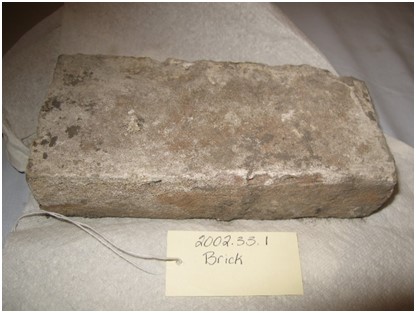
Brick |
Source |
African American Museum of Iowa |
Iowa History Era Tag |
Territorial Iowa (1803-1846) |
Chronological Tag |
Expansion and Reform (1801-1861) |
Catalog Number |
2018.012.001 |
Credit line |
African American Museum of Iowa - Cedar Rapids, Iowa |
Description |
This brick was taken from the foundation of the Henderson Lewelling house in Salem, Iowa, which was a stop on the Underground Railroad. Content can be used with the following standards: 5th grade SS 5.26 Civil Rights and SS-U.S. 9-12.23 Iowans Influence U.S. History in a lesson on the Underground Railroad and the impact it had on the Civil War. For any use other than instructional resources, please check with the organization that owns this item regarding copyright restrictions. |
Additional Research & Sources |
Salem, the first Quaker community in Iowa, was known as "the main ticket office" of the Underground Railroad in southeast Iowa. Located near the Missouri border, slaves were entering Salem by 1839. Henderson Lewelling, a Quaker from Indiana, and his family moved to Salem in 1837 to start a nursery. While the Quakers were anti-slavery, the society, both nationally and in Salem, became divided over how proactive the society should be in the abolitionist cause. In 1843, the society in Salem split and Lewelling led the portion of the town's community that became active in the Underground Railroad. The Henderson Lewelling House became notable as being the site of the beginning of the Ruel Daggs case in 1848. Nine slaves escaped from Ruel Daggs' farm in Missouri but were caught by slave catchers near Salem. A resident saw the group and demanded the slaves be taken before the Justice of the Peace. A large crowd followed the group to Lewelling's house where Nelson Gibbs, Justice of the Peace, rented his office. The volume of spectators caused the trial to be moved to the Anti-Slavery Meeting House. Justice Gibbs dismissed the case after the slave catchers had no warrants to arrest the slaves. Today, the Henderson Lewelling House is now home to the Lewelling Quaker Museum, but evidence of its use in the Underground Railroad remains. Trap doors from the kitchen lead to a north room connected by a crawl space. There is a tunnel under the house that runs to the basement fireplace. Another tunnel in the farmhouse runs into a field. |
Notes on Related Objects |
Object is related to the following library resources, which can be found by searching the catalog number in the advanced search section: Catalog #: 2018.045.027- The Sacred Cause of Union: Iowa in the . Civil War 2018.045.030- Life Narratives of African Americans in . . Iowa 2018.045.031- Iowa's Black Legacy 2018.045.036- The Negro in Iowa, with an Editorial Addendum Twenty Years After by William J. Petersen 2018.045.040 Biographical Review of Henry County, Iowa 2018.045.046 Enlistments from Iowa during the Civil War 2018.045.052- Iowa: Its History and Its Foremost Citizens 2018.045.062- Black Life on the Mississippi 2018.045.063- Iowa in Times of War 2018.045.072- The Story of Iowa: A Children's History 2018.045.073- Border Defense in Iowa During the Civil War 2018.045.075- One Hundred Topics in Iowa History 2018.045.083- A History of the People of Iowa 2018.045.087- Iowa Through the Years 2018.045.106- Bright Radical Star: Black Freedom and White Supremacy on the Hawkeye Frontier 2018.045.138- History of Iowa from the Earliest Times to the Beginning of the Twentieth Century 2018.045.158- The History of Henry County 2018.045.143- Iowa Inside Out |
Primary/Secondary Source |
Significant - State/National |
County Tag |
Henry |
Relation |
Show Related Records... |
Multimedia Links |
Click here to view/hear the file. |
Search Terms |
African American Experience Civil War People Rail Underground railroad system |
Legal Status |
Ownership of this resource is held by the African American Museum of Iowa and has been provided here for educational purposes only, specifically for use in the Iowa Museum Association's "Teaching Iowa History" project. It may not be downloaded, reproduced or distributed in any format without written permission from the Rights Holder. For information on U.S. and International copyright laws, consult an attorney. |