Object Record
Images
Metadata
Object Name |
Textbook |
Source |
Amana Heritage Society |
Iowa History Era Tag |
Prosperity to the Depression (1897-1939) |
Chronological Tag |
The Emergence of Modern America (1890-1930) |
Catalog Number |
2018.040.010 |
Credit line |
Amana Heritage Society - Amana, Iowa |
Description |
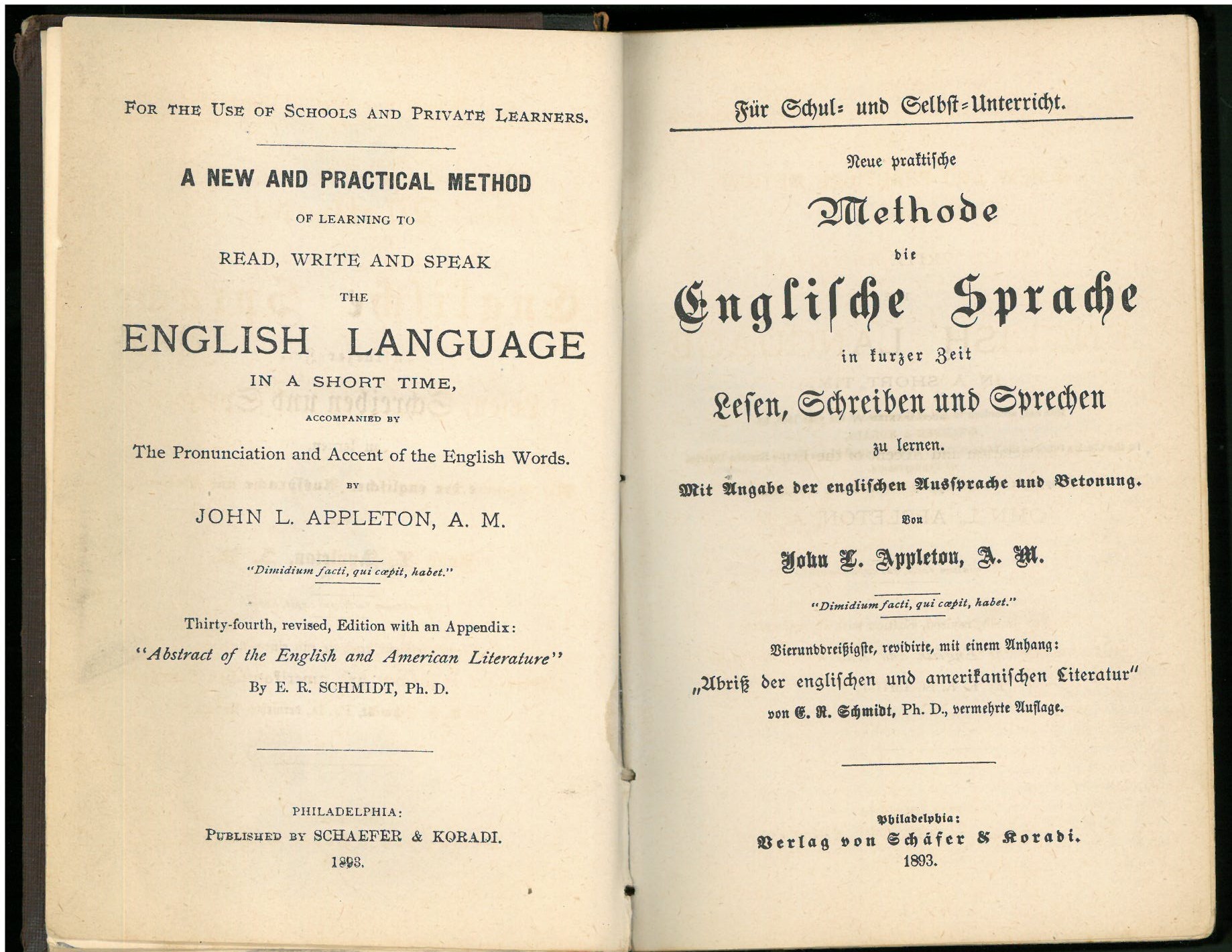
This textbook, which was first created in 1893, was used to teach German speakers how to read, write, and speak English. In May 1918, Iowa Governor William Harding issued the Babel Proclamation, which made it illegal for anyone to speak any language other than English in public, in schools, and in church. In the months that followed this proclamation, textbooks like this replaced German textbooks used in places such as the Amana Colonies, where most of the population spoke German. This marked one of the first steps towards standardized education in Iowa. Content can be used with the following standards; 3rd grade SS 3.27 Immigration and Migration, 8th grade SS 8.25 Iowa Government, SS-Gov. 9-12.27 Unique Iowa Systems, SS-US. 9-12.23 Iowans Influence US History, and SS-Gov. 9-12.28 Iowa Issues and Policy in a lesson on anti-German sentiment in Iowa during the early 1900s. For any use other than instructional resources, please check with the organization that owns this item regarding copyright restrictions. |
Additional Research & Sources |
During the course of WWI, the resentment towards German immigrants increased when German submarines attacked U.S. passenger and merchant ships. German-Americans began to be viewed as suspicious and possibly traitors of the nation. Many believed that those speaking in German were speaking of Germany government war plans and plans to attack the United States. There was strong belief that the language of our nation had to be separated from the language of the enemy. Governor Harding of Iowa began a language ban on writing and speaking German, that soon found its way into businesses, schools, and everyday life. Schools began to use English resources only, German families began to alter the spelling of their last name, common German foods were changed to a more American version and German newspaper/magazines were no longer printed. Harding found the ban legal under the First Amendment, explaining that citizens were entitled to freedom of speech as long as it is spoken in the native English language. The proclamation was repealed on December 14, 1918, however German resentment continued despite the end of the war. In 1923, the US Supreme Court granted citizens the right to speak in any language they pleased. |
Notes on Related Objects |
Object is related to the following library resources, which can be found by searching the catalog number in the advanced search section: Catalog #: 2018.045.023- History of Education in Iowa 2018.045.096- History of Iowa County, Iowa and Its People 2018.045.124- A Treasury of Iowa Tales 2018.045.178- Iowa’s Proud Heritage 2018.045.181- Uniquely Iowa 2018.045.191- Iowa: The Home for Immigrants 2018.045.192- Iowa: The Definitive Collection |
County Tag |
Iowa |
People |
Harding, William |
Relation |
Show Related Records... |
Multimedia Links |
Click here to view/hear the file. |
Search Terms |
Education Immigrants Literature Government WW1 Babel Proclamation English language |
Legal Status |
Ownership of this resource is held by the Amana Heritage Society and has been provided here for educational purposes only, specifically for use in the Iowa Museum Association's "Teaching Iowa History" project. It may not be downloaded, reproduced or distributed in any format without written permission from the Rights Holder. For information on U.S. and International copyright laws, consult an attorney. |