
Object Record
Images
Metadata
Object Name |
Crusher, Ice |
Source |
Heartland Museum Foundation |
Iowa History Era Tag |
Prosperity to the Depression (1897-1939) |
Chronological Tag |
The Emergence of Modern America (1890-1930) |
Catalog Number |
2018.054.011 |
Credit line |
Heartland Museum Foundation- Clarion, Iowa |
Description |
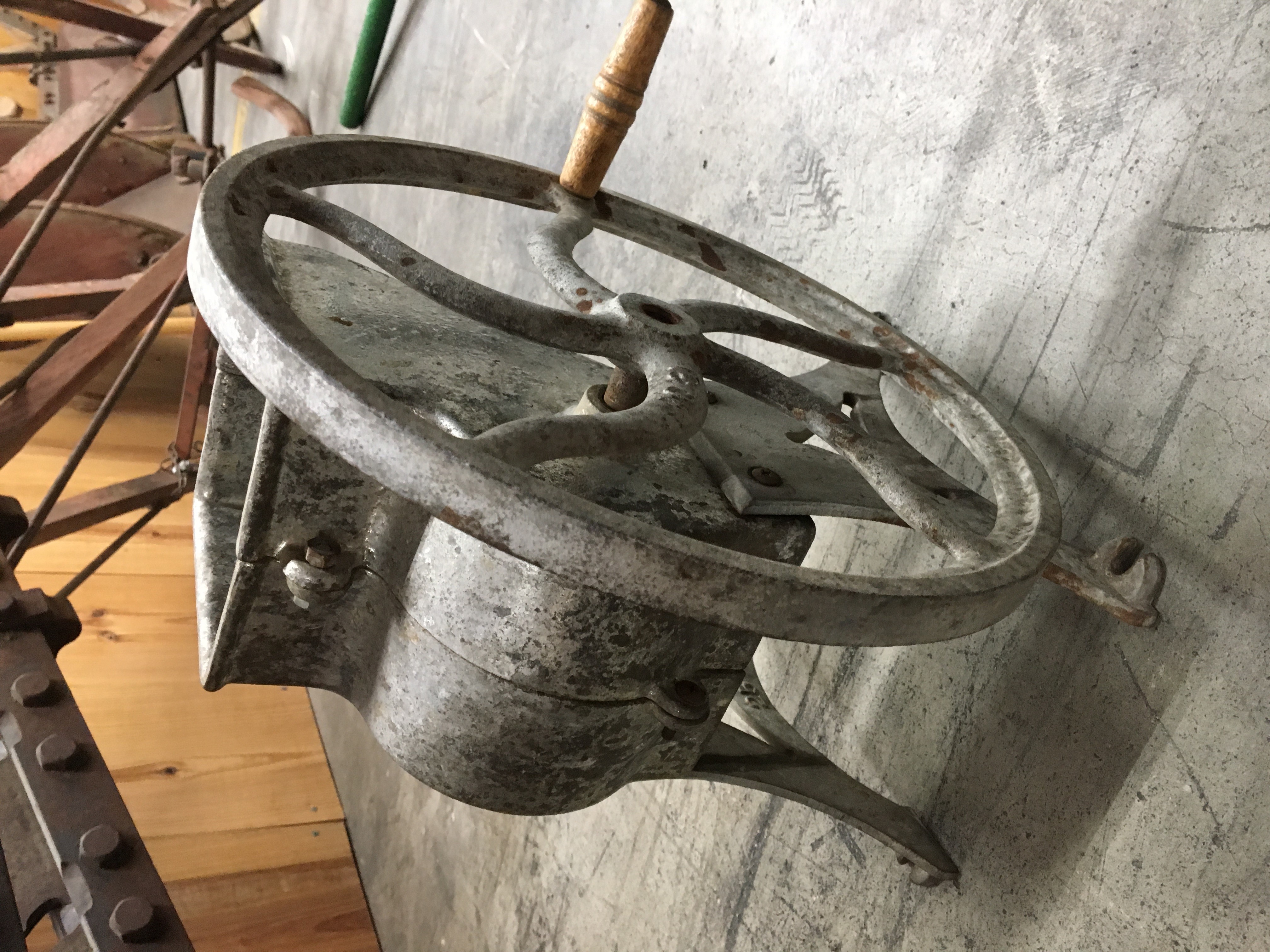
This device would have been used to crush ice to make popular treats such as snowcones or other desserts. Content can be used with the following standards: 4th grade SS 4.25 Technological Change and SS-Econ. 9-12.24 Iowa Impact Upon Economy in a lesson on the ice trade. For any use other than instructional resources, please check with the organization that owns this item regarding copyright restrictions. |
Additional Research & Sources |
In a period before air conditioning and electric refridgerators, ice was essential in homes during the hot summer months. Used in the home for providing relief in the summer and during times of sickness, and to keep foods such as meat, eggs, milk and fruit from going bad, the "ice trade" during the 1800s help increased the ice harvest to transport ice to homes across the midwest. Nathaniel Jarvis Wyeth was a key figure to the increase in ice transportation, with his invention of a horse-drawn plow, whose blades cut the ice into movable ice blocks. The new standard ice blocks could be easily removed and stacked (using ice elevators) in ice houses constructed by Wyeth. These ice houses were insulated to keep the ice from melting throughout the winter. In the spring, the ice would be taken out and shipped on ice barges down the river to various cities. |
Primary/Secondary Source |
General primary source |
County Tag |
Wright |
Relation |
Show Related Records... |
Multimedia Links |
Click here to view/hear the file. Click here to view/hear the file. |
Search Terms |
Business & Industry Types of Business and Industries Ice industry |
Legal Status |
Ownership of this resource is held by the Heartland Museum Foundation and has been provided here for educational purposes only, specifically for use in the Iowa Museum Association's "Teaching Iowa History" project. It may not be downloaded, reproduced or distributed in any format without written permission from the Rights Holder. For information on U.S. and International copyright laws, consult an attorney. |
.jpg)