Object Record
Images
Metadata
Object Name |
Cover, Matzo |
Source |
Iowa Jewish Historical Society |
Iowa History Era Tag |
World War II to an Urban State (1940-1963) |
Catalog Number |
2018.014.005 |
Credit line |
Iowa Jewish Historical Society - Waukee, Iowa |
Description |
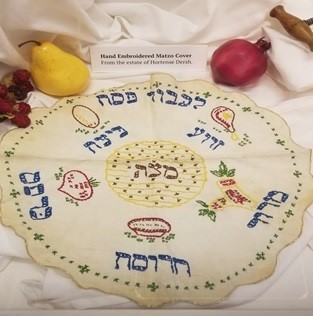
Matzo covers such as this one are used to cover Matzah, a thin, unleavened bread eaten during the 8-day Passover holiday. This object is embroidered with symbols of the Passover Seder dinner, which marks the beginning of the holiday. The symbols include an egg, bitter herbs, shank bone, vegetable, and Charoset, a sweet dark-colored paste made of fruits and nuts. Content can be used with the following standards: 1st grade SS 1.23 Cultural Makeup in a lesson on different religions and their customs and traditions. For any use other than instructional resources, please check with the organization that owns this item regarding copyright restrictions. |
Additional Research & Sources |
The flat bread is a traditional meal eaten during the first Seder meal to commemorate when the Israelites left Egypt, not giving them time to rise their bread. The bread represents the freedom the Israelites felt as they left Egypt. Three pieces of the bread are used in Jewish holidays: two to be eaten on Sabbath to symbolize the food from heaven the Isralites gathered each day and the third to be broken on Passover to begin the service. The number three also symbolizes the three categories of Jews, and the three patriachs, Abraham, Issac and Jacob. |
Notes on Related Objects |
Object is related to the following library resources, which can be found by searching the catalog number in the advanced search section: Catalog #: 2018.045.151- Hastie’s History of Dallas County, Iowa |
Primary/Secondary Source |
General primary source |
County Tag |
Dallas |
Multimedia Links |
Click here to view/hear the file. |
Search Terms |
Cultural Events Religion Matzos Passover |
Legal Status |
Ownership of this resource is held by the Iowa Jewish Historical Society and has been provided here for educational purposes only, specifically for use in the Iowa Museum Association's "Teaching Iowa History" project. It may not be downloaded, reproduced or distributed in any format without written permission from the Rights Holder. For information on U.S. and International copyright laws, consult an attorney. |